

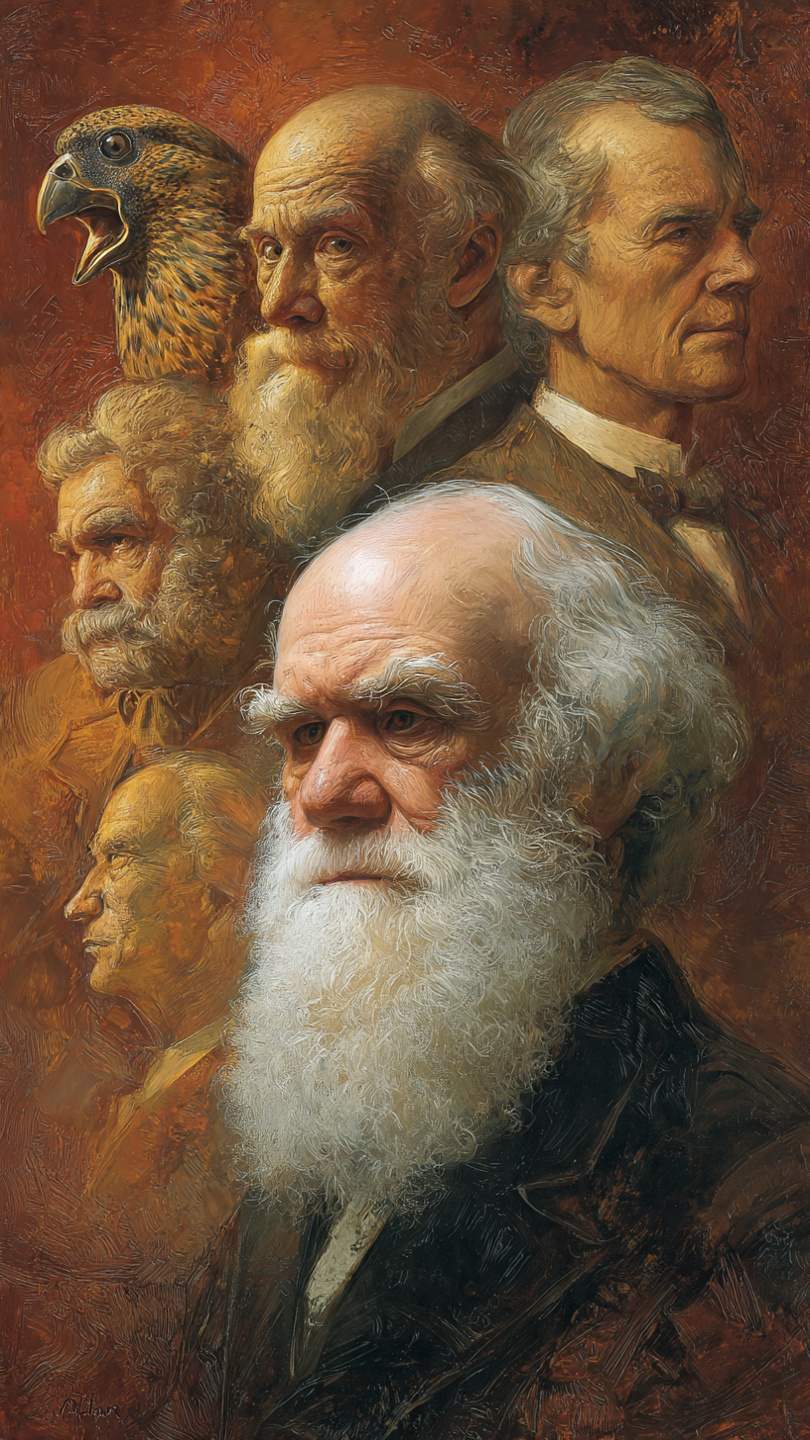
Organic evolution stands as one of the most transformative concepts in the history of human thought, providing the fundamental framework for understanding the diversity and interconnectedness of all life on Earth. In the domain of Physical and Biological Anthropology, grasping the mechanics of evolution is not merely an academic exercise; it is essential for comprehending the biological history of our own species and the complex web of life that sustains us. At its simplest level, evolution is defined as "change" over time. As noted by Herbert Spencer in 1857, it describes the process by which complex life forms have developed from simpler, earlier forms. This course rigorously examines organic evolution—often termed bio-evolution—as the process of "descent with modification", ensuring students understand the continuity of life alongside the constant modifications that drive biological novelty.
The central premise of this course is that the highly organized living beings we observe today are not static entities but are the result of gradual modifications accumulated over millions of years. We will explore how the natural world is dynamic, with environmental conditions that are constantly shifting. In response to these pressures, organisms exhibit an inherent capacity to adjust, a trait known as adaptability or adaptation. Students will investigate how these adjustments lead to the emergence of new species that are better suited to their environments than their predecessors. We will trace the journey of populations as they split and move to new geographical areas—often driven by the search for food or the need to escape predators—and how they gradually adapt to new surroundings, ultimately leading to speciation, or the formation of new species from a single ancestor.
null Mechanisms and Patterns of Change
A significant portion of the curriculum is dedicated to the mechanisms that drive evolutionary change: mutation, natural selection, genetic drift, and gene flow. We will move beyond simple definitions to understand how these forces interact to alter the genetic composition of populations over generations. Furthermore, the course provides a detailed survey of the five distinct patterns of evolution:
- Divergent Evolution: We will analyze how a single population splits and adapts to different pressures, resulting in homologous structures—such as the similar bone patterns found in the forelimbs of humans, whales, and bats—that reveal common ancestry despite different current functions.
- Convergent Evolution: Students will examine how unrelated species develop similar traits (analogous structures) when facing similar environmental challenges, such as the wings of birds and butterflies.
- Coevolution: We will study the intricate dance of mutual adaptation between interacting species, such as the specialized relationships between pollinators and flowering plants.
- Parallel Evolution: The course covers scenarios where related species independently acquire similar characteristics while evolving together in separate but similar environments, exemplified by North American and Tasmanian wolves.
- Adaptive Radiation: We will look at rapid diversification events where a single ancestral species gives rise to a multitude of new forms to fill various ecological niches, with Darwin's Galapagos finches serving as a primary case study.
null Evidence and Relevance
Finally, we will substantiate these theories with robust lines of evidence, including comparative anatomy, the fossil record, and molecular phylogenies. Understanding these evidence lines is crucial for distinguishing scientific evolutionary theory from non-scientific narratives. The course concludes by emphasizing the practical importance of evolution in modern society. From driving innovations in medicine and agriculture to addressing pressing environmental issues, evolutionary theory is the backbone of modern biology. By the end of the term, students will appreciate how evolutionary science helps us tackle diseases, understand biodiversity loss, and navigate the biological challenges of the 21st century.
null Learning Outcomes
Upon successful completion of this course, students will be able to demonstrate a comprehensive and nuanced understanding of organic evolution. The specific measurable learning outcomes for this module include:
- Define and Contextualize Evolutionary Concepts: Students will be able to clearly define organic evolution as "descent with modification" and "change in allele frequencies over time," distinguishing these scientific definitions from colloquial uses of the term "evolution" and explaining the historical contribution of figures like Herbert Spencer and Charles Darwin.
- Analyze Evolutionary Mechanisms: Students will be able to explain and compare the four primary mechanisms of evolution—mutation, natural selection, genetic drift, and gene flow—and evaluate how each mechanism contributes to the genetic diversification of populations and the adaptation of organisms to their environments.
- Interpret Patterns of Speciation: Students will be able to identify and differentiate between the five major patterns of evolution (Divergent, Convergent, Coevolution, Parallel, and Adaptive Radiation) by analyzing specific biological case studies, such as the homologous structures in mammalian limbs or the adaptive radiation of finches.
- Evaluate Evolutionary Evidence: Students will be able to critically evaluate the lines of evidence supporting the theory of evolution, specifically drawing connections between comparative anatomy (homologous vs. analogous structures), the fossil record, and modern molecular data to construct arguments for common ancestry.
- Apply Evolutionary Theory to Real-World Problems: Students will be able to apply evolutionary principles to contemporary challenges in medicine (e.g., antibiotic resistance), agriculture (e.g., crop resilience), and conservation biology, demonstrating the relevance of the "survival of the fittest" concept in dynamic ecosystems.
- Deconstruct Misconceptions: Students will be able to identify and correct common misconceptions regarding evolution, such as the confusion between "theory" in scientific terms versus common language, and articulate why evolutionary theory is considered the verified backbone of modern biological sciences.
null Indicative Course Outline (Topics)
This course is structured to guide students from the historical foundations of evolutionary thought through to the complex genetic mechanisms and broad-scale patterns of life's history. The following topic sequence aligns with the course textbook and module structure:
- Module 1: Introduction to Organic Evolution: We begin by establishing the definition and scope of organic evolution, reviewing the historical context of biological thought, and introducing key terminology that will be used throughout the semester (Reference: Chapter 1).
- Module 2: Theories of Evolution: This section explores the history of evolutionary theory, comparing pre-Darwinian ideas with Darwin's theory of natural selection and the Modern Synthesis that integrated genetics (Reference: Chapter 2).
- Module 3: Mechanisms of Evolution: A detailed examination of the forces that drive change in populations, focusing on how selection pressures from the environment shape the physical and behavioral traits of organisms (Reference: Chapter 3).
- Module 4: Mutation as a Source of Variation: We will investigate the molecular basis of mutation, understanding it as the ultimate source of new genetic variation upon which selection acts, rather than a purely deleterious process (Reference: Chapter 4).
- Module 5: Processes and Outcomes of Evolution: This module connects mechanisms to results, discussing adaptation, fitness, and the gradual divergence of lineages that leads to the vast biodiversity we observe today (Reference: Chapter 5).
- Module 6: Population Genetics and the Hardy-Weinberg Principle: Students will learn to apply mathematical models to track allele frequencies and understand the conditions under which evolution does—or does not—occur in a population (Reference: Chapter 6).
- Module 7: Polymorphism in Populations: We will explore the occurrence of two or more clearly different phenotypes in the same population of a species and discuss the evolutionary advantages of maintaining such genetic diversity (Reference: Chapter 7).
- Module 8: Evolution and Variation: This topic deepens the discussion on variation, examining how continuous and discontinuous variation serves as the raw material for natural selection to act upon (Reference: Chapter 8).
- Module 9: The Origin of Life: A theoretical exploration of the abiogenesis hypothesis and the early chemical evolution that likely preceded the first biological cells on Earth (Reference: Chapter 9).
- Module 10: Evidence of Evolution: The course concludes by synthesizing the empirical evidence from geology, anatomy, and genetics that validates the theory of evolution (Reference: Chapter 10).
The central premise of this course is that the highly organized living beings we observe today are not static entities but are the result of gradual modifications accumulated over millions of years. We will explore how the natural world is dynamic, with environmental conditions that are constantly shifting. In response to these pressures, organisms exhibit an inherent capacity to adjust, a trait known as adaptability or adaptation. Students will investigate how these adjustments lead to the emergence of new species that are better suited to their environments than their predecessors. We will trace the journey of populations as they split and move to new geographical areas—often driven by the search for food or the need to escape predators—and how they gradually adapt to new surroundings, ultimately leading to speciation, or the formation of new species from a single ancestor.
null Mechanisms and Patterns of Change
A significant portion of the curriculum is dedicated to the mechanisms that drive evolutionary change: mutation, natural selection, genetic drift, and gene flow. We will move beyond simple definitions to understand how these forces interact to alter the genetic composition of populations over generations. Furthermore, the course provides a detailed survey of the five distinct patterns of evolution:
- Divergent Evolution: We will analyze how a single population splits and adapts to different pressures, resulting in homologous structures—such as the similar bone patterns found in the forelimbs of humans, whales, and bats—that reveal common ancestry despite different current functions.
- Convergent Evolution: Students will examine how unrelated species develop similar traits (analogous structures) when facing similar environmental challenges, such as the wings of birds and butterflies.
- Coevolution: We will study the intricate dance of mutual adaptation between interacting species, such as the specialized relationships between pollinators and flowering plants.
- Parallel Evolution: The course covers scenarios where related species independently acquire similar characteristics while evolving together in separate but similar environments, exemplified by North American and Tasmanian wolves.
- Adaptive Radiation: We will look at rapid diversification events where a single ancestral species gives rise to a multitude of new forms to fill various ecological niches, with Darwin's Galapagos finches serving as a primary case study.
null Evidence and Relevance
Finally, we will substantiate these theories with robust lines of evidence, including comparative anatomy, the fossil record, and molecular phylogenies. Understanding these evidence lines is crucial for distinguishing scientific evolutionary theory from non-scientific narratives. The course concludes by emphasizing the practical importance of evolution in modern society. From driving innovations in medicine and agriculture to addressing pressing environmental issues, evolutionary theory is the backbone of modern biology. By the end of the term, students will appreciate how evolutionary science helps us tackle diseases, understand biodiversity loss, and navigate the biological challenges of the 21st century.
null Learning Outcomes
Upon successful completion of this course, students will be able to demonstrate a comprehensive and nuanced understanding of organic evolution. The specific measurable learning outcomes for this module include:
- Define and Contextualize Evolutionary Concepts: Students will be able to clearly define organic evolution as "descent with modification" and "change in allele frequencies over time," distinguishing these scientific definitions from colloquial uses of the term "evolution" and explaining the historical contribution of figures like Herbert Spencer and Charles Darwin.
- Analyze Evolutionary Mechanisms: Students will be able to explain and compare the four primary mechanisms of evolution—mutation, natural selection, genetic drift, and gene flow—and evaluate how each mechanism contributes to the genetic diversification of populations and the adaptation of organisms to their environments.
- Interpret Patterns of Speciation: Students will be able to identify and differentiate between the five major patterns of evolution (Divergent, Convergent, Coevolution, Parallel, and Adaptive Radiation) by analyzing specific biological case studies, such as the homologous structures in mammalian limbs or the adaptive radiation of finches.
- Evaluate Evolutionary Evidence: Students will be able to critically evaluate the lines of evidence supporting the theory of evolution, specifically drawing connections between comparative anatomy (homologous vs. analogous structures), the fossil record, and modern molecular data to construct arguments for common ancestry.
- Apply Evolutionary Theory to Real-World Problems: Students will be able to apply evolutionary principles to contemporary challenges in medicine (e.g., antibiotic resistance), agriculture (e.g., crop resilience), and conservation biology, demonstrating the relevance of the "survival of the fittest" concept in dynamic ecosystems.
- Deconstruct Misconceptions: Students will be able to identify and correct common misconceptions regarding evolution, such as the confusion between "theory" in scientific terms versus common language, and articulate why evolutionary theory is considered the verified backbone of modern biological sciences.
null Indicative Course Outline (Topics)
This course is structured to guide students from the historical foundations of evolutionary thought through to the complex genetic mechanisms and broad-scale patterns of life's history. The following topic sequence aligns with the course textbook and module structure:
- Module 1: Introduction to Organic Evolution: We begin by establishing the definition and scope of organic evolution, reviewing the historical context of biological thought, and introducing key terminology that will be used throughout the semester (Reference: Chapter 1).
- Module 2: Theories of Evolution: This section explores the history of evolutionary theory, comparing pre-Darwinian ideas with Darwin's theory of natural selection and the Modern Synthesis that integrated genetics (Reference: Chapter 2).
- Module 3: Mechanisms of Evolution: A detailed examination of the forces that drive change in populations, focusing on how selection pressures from the environment shape the physical and behavioral traits of organisms (Reference: Chapter 3).
- Module 4: Mutation as a Source of Variation: We will investigate the molecular basis of mutation, understanding it as the ultimate source of new genetic variation upon which selection acts, rather than a purely deleterious process (Reference: Chapter 4).
- Module 5: Processes and Outcomes of Evolution: This module connects mechanisms to results, discussing adaptation, fitness, and the gradual divergence of lineages that leads to the vast biodiversity we observe today (Reference: Chapter 5).
- Module 6: Population Genetics and the Hardy-Weinberg Principle: Students will learn to apply mathematical models to track allele frequencies and understand the conditions under which evolution does—or does not—occur in a population (Reference: Chapter 6).
- Module 7: Polymorphism in Populations: We will explore the occurrence of two or more clearly different phenotypes in the same population of a species and discuss the evolutionary advantages of maintaining such genetic diversity (Reference: Chapter 7).
- Module 8: Evolution and Variation: This topic deepens the discussion on variation, examining how continuous and discontinuous variation serves as the raw material for natural selection to act upon (Reference: Chapter 8).
- Module 9: The Origin of Life: A theoretical exploration of the abiogenesis hypothesis and the early chemical evolution that likely preceded the first biological cells on Earth (Reference: Chapter 9).
- Module 10: Evidence of Evolution: The course concludes by synthesizing the empirical evidence from geology, anatomy, and genetics that validates the theory of evolution (Reference: Chapter 10).
- Teacher: د. سالى رمضان جبر عيد
Skill Level: Beginner