


A- Basic Information
Title: Applications of computer programs (1) Code: HETC 283
Credit Hours: 2 hours Lecture: 1 hour
Practical: 3 hours Total: 4 hours
B- Professional Information
1 – Overall aims of course
This course is designed to make the student familiar to the computer system (hardware and software), using PC and managing files and folders, knowing computer networks and its types, and also give student basic information about computer programs and how to deal with some of it such as (Word Processing: Microsoft Word).
2 – Intended learning outcomes of course (ILOs)
a- Knowledge and understanding:
a1- Illustrate Computer system and its components.
a2- Show understanding of the difference between Computer Hardware and Software.
a3- Know the different input & output devices and their usage.
a4- know the commands and tasks of Microsoft word program.
b- Intellectual skills
b1- Identify the basic components of computer.
b2- Apply the skills in making neat word document.
c- Professional and practical skills
C1- The ability of dealing with Microsoft word program.
C2- The ability to surf the Internet.
d- General and transferable skills
d1-Use MS-Windows.
d2-Use MS-Office (Word).
d3-Use the Internet.
- Teacher: أيه عبد الرحمن عبدالحليم جاد .
- Teacher: ايناس اشرف احمد العقده .
Skill Level: Beginner
1. Dimensions and Physical units.
2. Vectors.
3. Static and dynamic of solid bodies.
4. Elasticity.
5. Viscosity.
6. Surface tension.
7. Concept of heat.
8. Thermometers.
9. Heat expansion.
10. Heat capacity.
11. Specific heat.
12. Transfer of heat.
13. Radiation and its application.
14. Law of gases.
15. First law of thermodynamic.
16.Second law of thermodynamic.
- Teacher: زينب يوسف مرسى يوسف .
- Teacher: سماح ابراهيم محمد شحاته .
Skill Level: Beginner
- Teacher: اسماء علاءالدين محمد ابراهيم .
- Teacher: صهيب مجدى عبدالحافظ محمود .
- Teacher: منى محمد محمد علي سيد .
Skill Level: Beginner
- Teacher: مروة محمد محمد خضري .
Skill Level: Beginner
- Teacher: شيماء حسن عبدالرحمن .
Skill Level: Beginner
Introduction
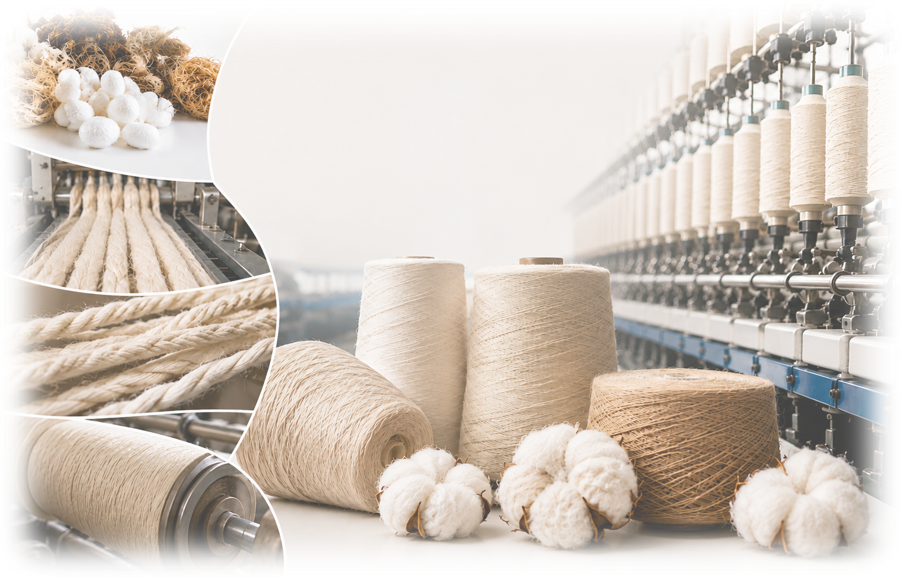
The Textile Technology (1) course provides a key foundation for textile and apparel studies. It aims to give students a clear understanding of the textile process from raw materials to final yarns. Product quality mainly depends on understanding the basic unit: the textile fiber, including its internal structure and properties.
The course begins with an overview of textile fibers, covering their classification and various origins, including natural, regenerated, and synthetic types. It highlights the essential general properties of fibers that affect their processing behavior and overall product performance.
Furthermore, the curriculum covers the principles of spinning technologies that convert fibers into yarns. It examines the sequential mechanical stages of spinning—from opening, cleaning, and blending, through carding, drawing, combing, and roving, to final spinning systems—along with synthetic fiber spinning methods.
Finally, the course covers yarn technology and structural classifications, introducing learners to various yarn forms, including single, plied, and fancy yarns. It provides an in-depth analytical study of yarn numbering systems—covering direct systems (such as Tex and Denier) and indirect systems (such as English and Metric counts)—enabling students to master conversion calculations. In alignment with downstream manufacturing, the curriculum further explores preparatory processes for weaving and foundational woven fabric structures. Within this interactive coursebook, these core principles are reinforced through dynamic illustrations, self-assessment activities, and applied calculation exercises designed to deliver an engaging, fiber-to-fabric learning experience.
- Teacher: إيناس محمد عبد الفتاح .
- Teacher: هبة زكريا محمد أبو حشيش .
Skill Level: Beginner
This course gives students the basic knowledge of textile chemistry. It deals with the properties of textile fibers; physical, chemical in addition to the serviceability properties. Also it explains the classification of textile fibers according to their source. This course allows student to recognize the natural fibers (cotton, flax, wool and silk) and regenerated fibers ( viscose, acetate and lyocell). It explains the chemical and physical structure of each fiber, their production steps, the properties and the end uses of each fibers.
- Teacher: رحاب محمود قطب على .
- Teacher: نجلاء عبد العظيم أمين السيد .
Skill Level: Beginner
1 – Overall aims of course
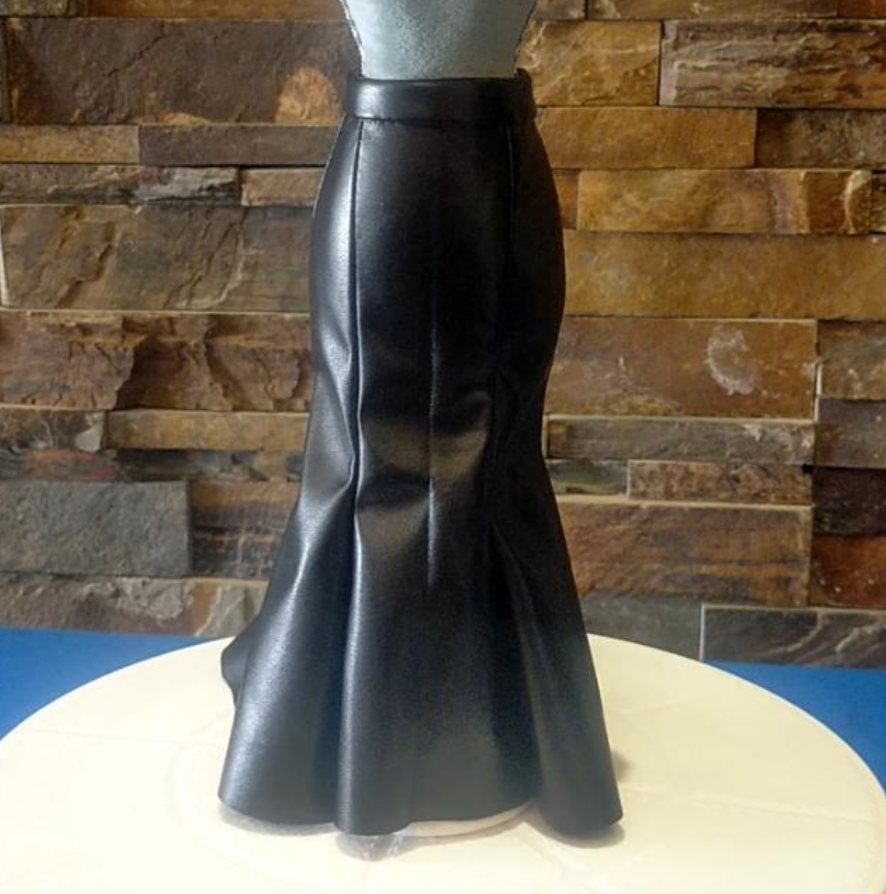
This course develops and extends the range of skills making drafts and paper patterns, their layout, methods of flat pattern making for skirts, and trousers and their variations. These concepts have to be applied in the creation of fashion ensembles.
Students will learn advanced pattern making with multiple variations of the basic blocks. Students will learn the technique of style reading and developing patterns for skirts and trousers. Students will be further enriched with the experience of making commercial paper patterns and grading patterns for skirts and trousers pattern.
2 – Intended learning outcomes of course (ILOs)
a- Knowledge and understanding:
a1- Define the terms used when drafting basic women's skirt patterns such as block, panel skirt, vent and box pleated, inverted pleated, kilt skirt, and etc.
a2 - Define the terms used when drafting basic women's pants patterns such as block, body rise, trousers with pleated waist line, flared and gathered trousers and etc.
a3- List the measurements required to draft the basic pattern for women's skirt, pants.
A4- List Basic principles of drafting patterns on paper and testing them in muslin on three-dimensional forms for women's skirts and pants.
A5- Define the grain line and
b- Intellectual skills
b1- Differentiate between the flat blocks and the form blocks.
b2- choosing between the different types of skirt's waist bands, which is suitable with the style
b3- Differentiate between women's figure type.
b4 Choosing the best style for each figure type
c- Professional and practical skills
1c- Create the appropriate pattern and pattern alteration for women's skirts suitable for each design using standard or personal measurements.
2c- Modify the pattern to meet the aimed design.
3c-Estimate the appropriate materials used for skirts and trousers.
4c- Select the best finishing technique could be used in each model or Design.
5c- Evaluate the final product from design, material, fit, and finishing techniques.
6c- Design the final personal project with suitable pattern, material, finishing technique, facing, and interfacing.
d- General and transferable skills
d1- Set tasks and manage their time and jobs as well as acquire self and long-life learning.
d2- Use new technological available tools, informant & communication technology.
- Teacher: كاميليا موسى محمد الزينى .
Skill Level: Beginner
